TKG_logoPlatform_White_logo

Tweet World Travel | Inspiration

Articles

Latest articles

The Future of Travel Technology in 2026 and Beyond

Why the next generation of travel businesses must become smarter, faster, and more connected

The travel industry has always been about people. It is about dreams, culture, connection, service, and trust. But in 2026 and beyond, the businesses that will lead the travel industry will not only be the ones with beautiful products or strong relationships. They will be the ones that know how to combine human expertise with intelligent technology.

Technology is no longer something travel businesses can “think about later.” It is now part of how we sell, operate, serve clients, manage data, and grow.

Reports from WTTC and Trip.com Group show that major technologies such as AI, 5G, fintech, sustainable mobility, and digital platforms are already reshaping travel and tourism worldwide. Their 2026 report highlighted 16 transformative technologies expected to redefine the sector. (World Travel & Tourism Council)

For me, the future of travel technology is not about replacing people. It is about giving travel businesses the tools to work smarter, serve better, and grow stronger.
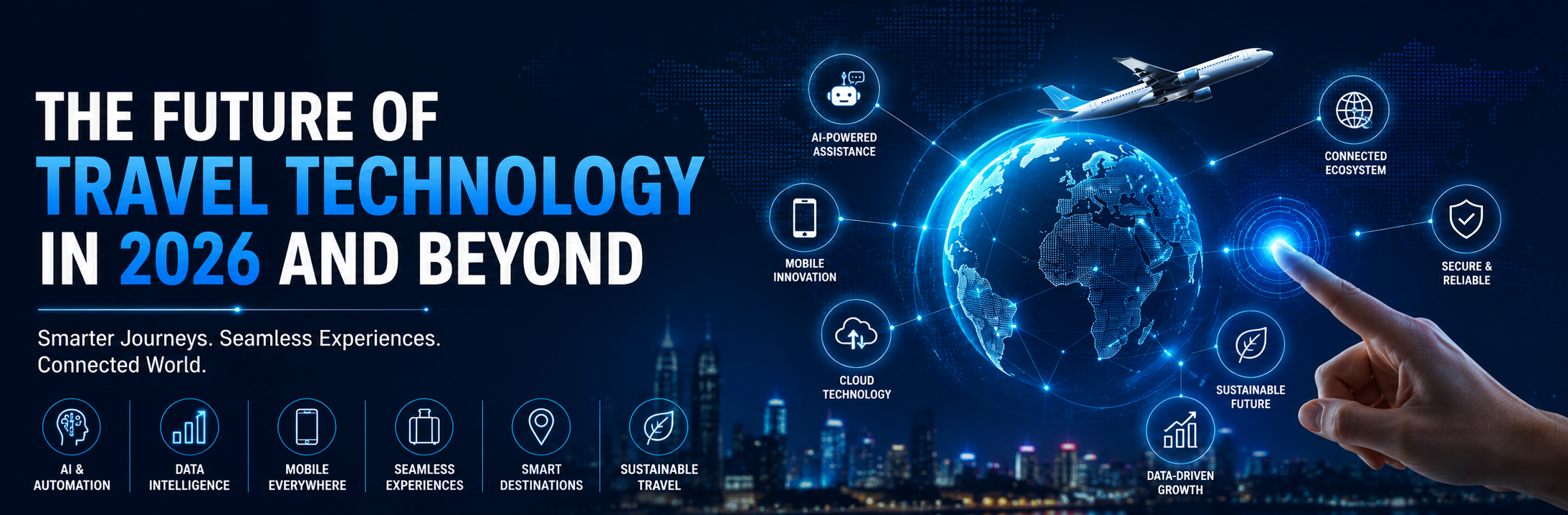
The future of travel technology

Why Traditional Travel Systems Are Holding Travel Agencies Back

The travel industry has changed, but many travel systems have not

The travel industry today moves faster than ever before.

Customers expect instant responses. Travellers want personalised experiences. Teams work remotely across different countries and time zones. Businesses manage multiple suppliers, channels, payments, marketing campaigns, and customer communications simultaneously.

Yet surprisingly, many travel agencies and tour operators are still relying on systems and workflows designed for the industry of 10 or even 20 years ago.

The reality is this:

Many travel businesses are trying to compete in a modern digital world using outdated technology.

And that is becoming one of the biggest barriers to growth.

As someone who has spent decades in both the travel and technology industries, I have seen firsthand how traditional systems can slow businesses down, frustrate staff, reduce sales opportunities, and limit scalability.

The future of travel belongs to businesses that are willing to modernise.

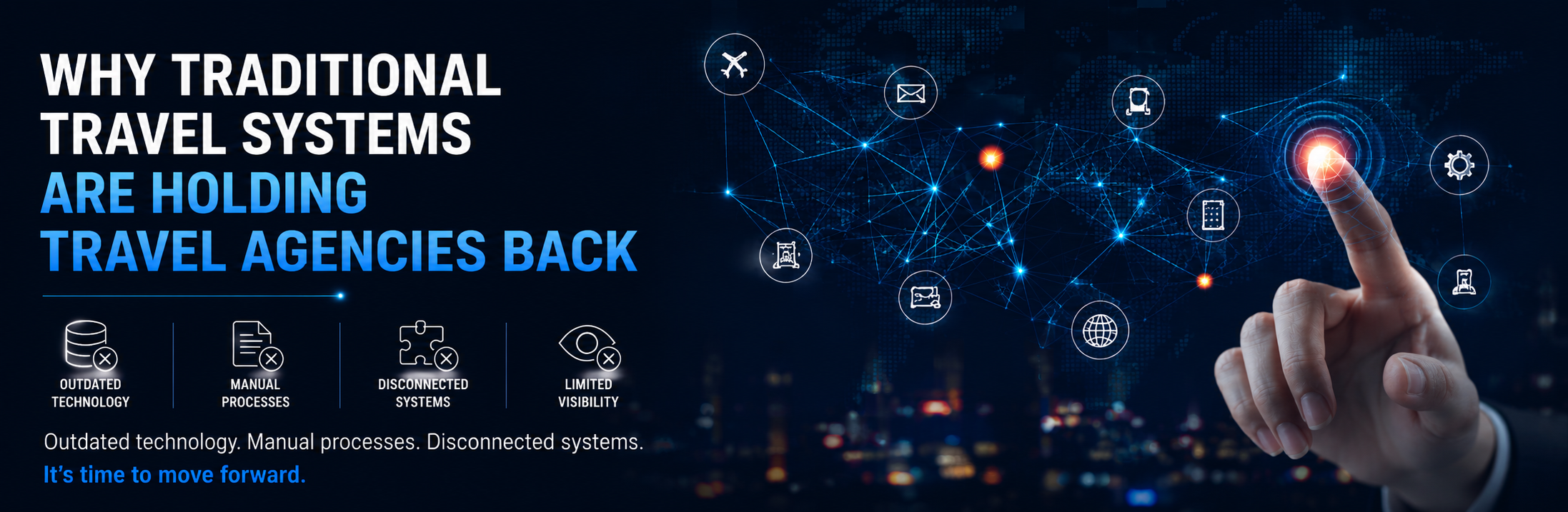
Why traditional travel systems hold back agencies

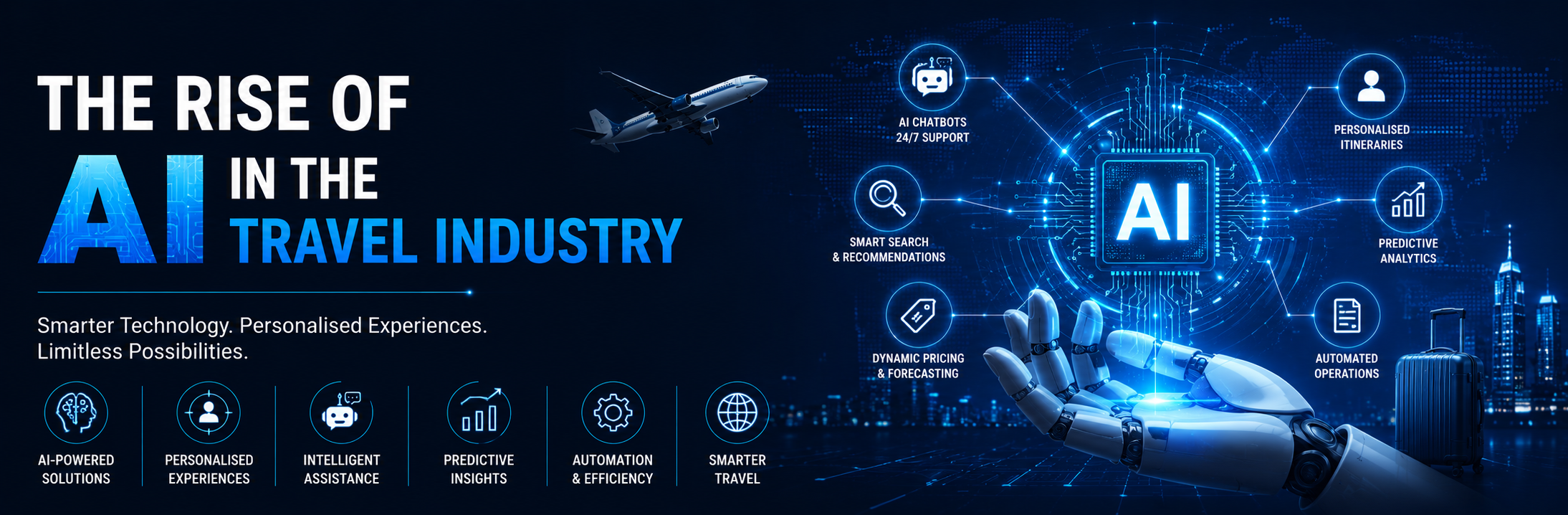
The Rise of AI in the Travel Industry

How Artificial Intelligence is transforming the future of travel, tourism, and customer experience

Artificial Intelligence is no longer a future concept in the travel industry.

It is already here.

From personalised travel recommendations and AI-powered customer service to automated operations and intelligent data analysis, AI is rapidly changing how travel businesses operate and how travellers experience the world.

But despite all the excitement around AI, many travel businesses are still asking the same important question:

"What does AI actually mean for us?"

As someone who has spent decades in both travel and technology, I believe the rise of AI is not about replacing travel professionals. It is about helping travel businesses become smarter, faster, more efficient, and more connected.

The travel industry has always been built on relationships, trust, and human experiences. AI should enhance those strengths, not remove them.

The businesses that understand how to combine human expertise with intelligent technology will lead the future of tourism.

AI-powered travel: the future unveiled

How Automation Is Changing Tour Operations

Why the future of tour operations is smarter, faster, and more connected

The travel industry has always been one of the most operationally complex industries in the world.

Behind every successful tour is an enormous amount of coordination happening behind the scenes:

  • bookings
  • supplier confirmations
  • rooming lists
  • transportation schedules
  • payments
  • passenger details
  • special requests
  • travel documents
  • guides
  • operations teams
  • emergency support
  • customer communication

For many tour operators, managing all of this manually has become increasingly difficult.

As customer expectations rise and competition grows, the pressure on operations teams continues to increase.

This is exactly why automation is becoming one of the biggest transformations in modern tour operations.

Automation is no longer just a 'technology upgrade.' It is becoming essential for survival, scalability, and growth.

And in my view, the future of successful tour operators will depend heavily on how intelligently they automate their business.

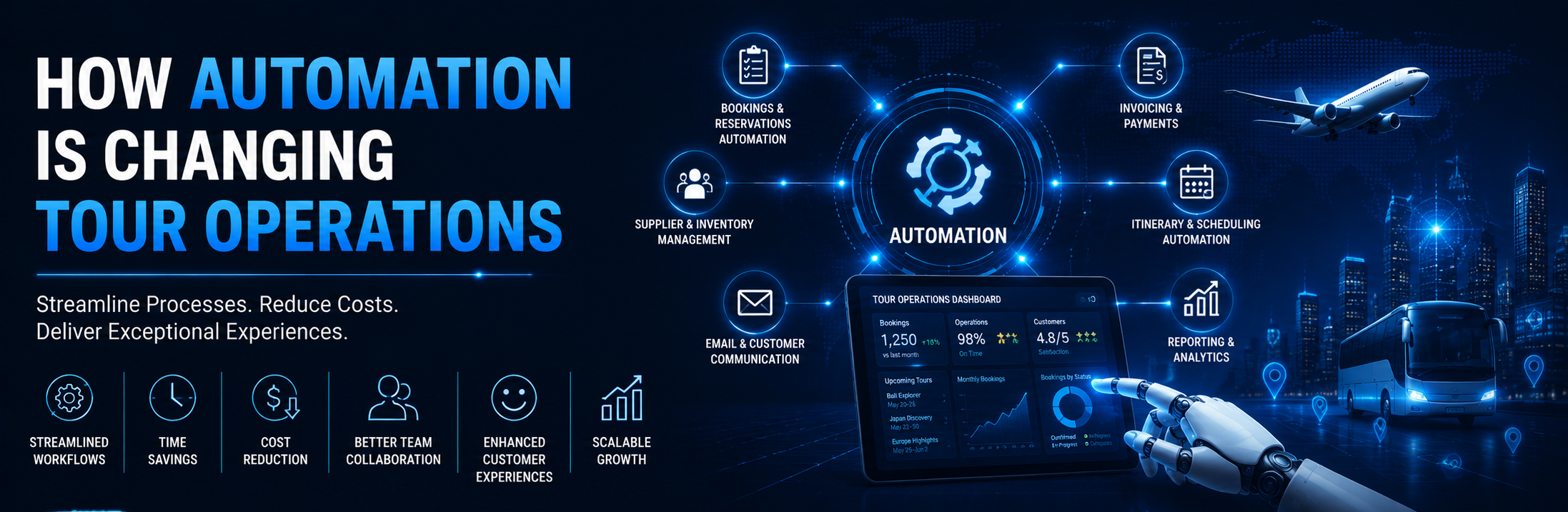
How Automation Is Changing Tour Operations

Why Modern Tour Operators Need an Integrated Platform

The future of travel operations is connected, intelligent, and scalable

The travel industry has become significantly more complex over the past decade.

Today’s tour operators are no longer simply selling tours.

They are managing:

  • global suppliers
  • customer relationships
  • online bookings
  • operations teams
  • marketing campaigns
  • travel documents
  • payments
  • reporting
  • mobile experiences
  • customer communication
  • automation
  • data security
  • real-time traveller expectations

At the same time, customers now expect faster service, personalised experiences, and seamless communication throughout their journey.

Yet surprisingly, many tour operators are still running their businesses using disconnected systems, spreadsheets, manual workflows, and outdated technology.

This creates operational inefficiency, staff pressure, slower growth, and inconsistent customer experiences.

The reality is simple:

Modern tour operators can no longer rely on fragmented systems if they want to remain competitive.

This is why integrated travel platforms are becoming one of the most important investments for the future of the travel industry.

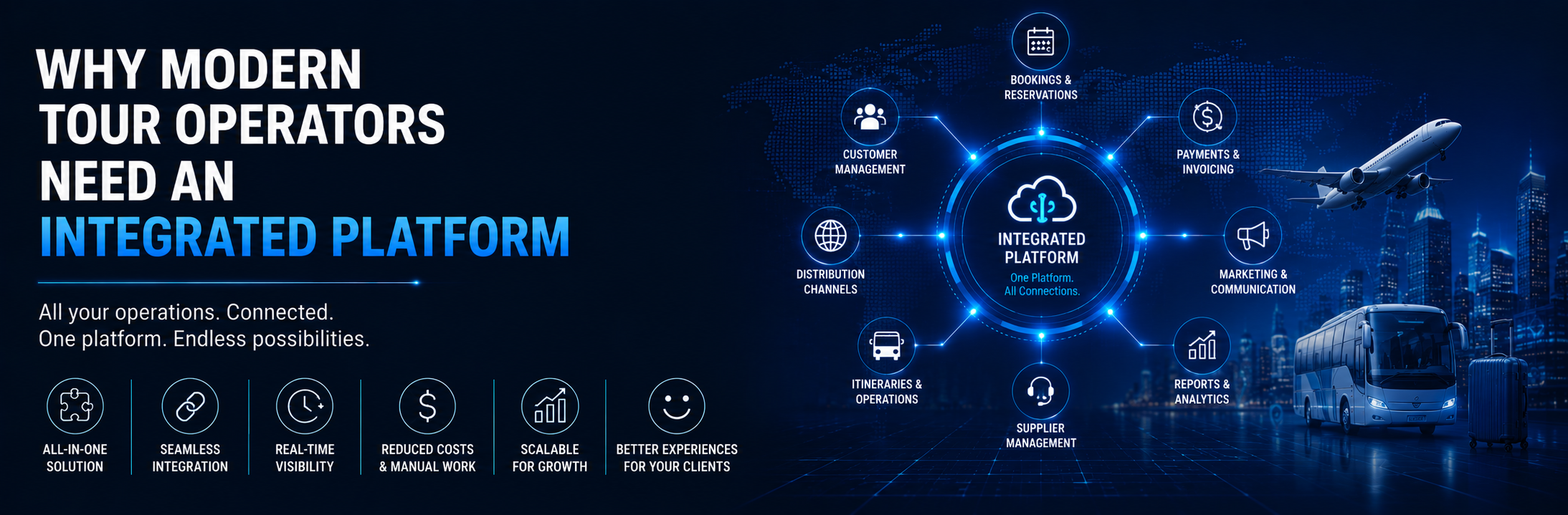
Why Modern Tour Operators Need an Integrated Platform